Program Benefits
The program provides a challenging and supportive environment that is conducive to learning and personal/professional development. In collaboration with UCF campus partners, McNair Scholars are offered:
- Personalized academic and personal support
- Involvement in a cohesive community of scholars and educators
- Faculty, graduate student, and peer mentoring
- Opportunities to engage in conducting research
- Opportunities to participate in research conferences and visit graduate schools
- Assistance in locating and applying to graduate schools
- Workshops on the graduate school application process, financial aid, scholarships, fellowships, and GRE preparation
Program Eligibility
Students interested in applying for the McNair Scholars Program at UCF must meet the following program eligibility criteria:
- Intend to pursue a Ph.D. or Ed.D. (professional degrees such as MD, JD, MBA, PharmD, etc. are not eligible)
- Intend to enroll in graduate school immediately after graduating UCF
- Identify as a low-income student (Pell-grant recipient) and a first-generation college student (neither parent or legal guardian completed a bachelor’s degree in the mainland United States).
- Be a U.S. Citizen or permanent resident
- Have a minimum cumulative GPA of 3.0
- Be enrolled full-time as an undergraduate student at UCF
- Have completed a minimum of 60 credit hours
- Have at least one semester left before graduation (excluding summer)
If you are still unsure whether you qualify for the program or if the program would be a good fit for your specific circumstances, please contact us at acegrants@ucf.edu.
Applying to the Program
The next application cycle is expected to open in December 2026. Check back here for more information.
UCF McNair Program Objectives
- Eighty-five percent (85%) of the McNair participants will complete research and scholarly activities that will directly impact their education progression during each McNair Program academic year.
- Seventy percent (70%) of McNair program bachelor’s degree recipients will be accepted and enrolled in a graduate program of study by the fall term of the academic year immediately following completion of the bachelor’s degree.
- Eighty-five percent (85%) of first year graduate students will continue to be enrolled in graduate school at the beginning of the fall term of the next academic year.
- Fifteen percent (15%) of the McNair participants will attain a doctoral degree within ten (10) years of the attainment of the bachelor’s degree.
About Dr. Ronald McNair
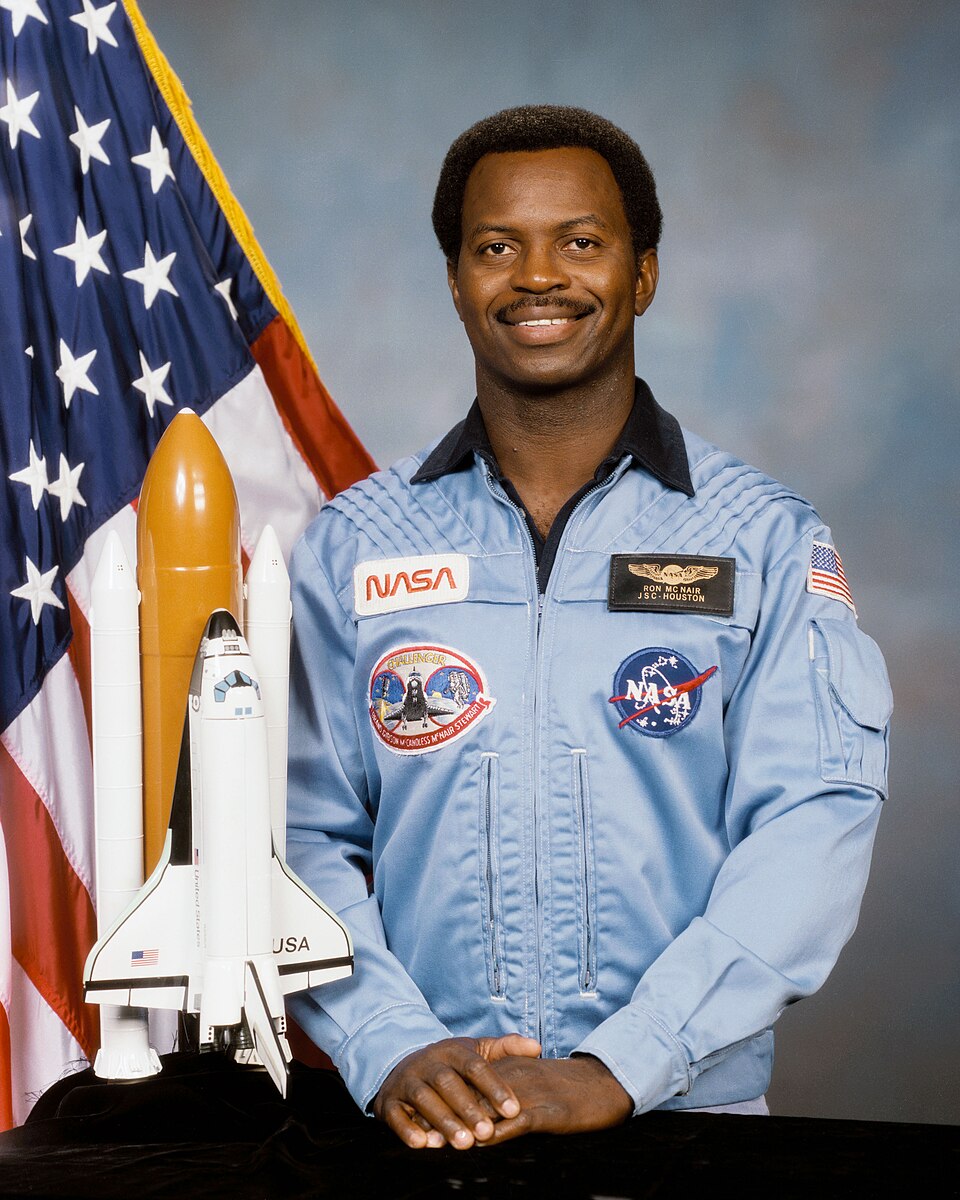
Ronald Erwin McNair was born October 21, 1950, in Lake City, South Carolina. While in junior high school, Dr. McNair was inspired to work hard and persevere in his studies by his family and by a teacher who recognized his scientific potential and believed in him. Dr. McNair graduated as valedictorian from Carver High School in 1967. In 1971, he graduated magna cum laude and received a bachelor of science degree in Physics from North Carolina A&T State University (Greensboro). Dr. McNair then enrolled in the prestigious Massachusetts Institute of Technology. In 1976, at the age of 26, he earned his Ph.D. in laser physics. His dissertation was titled, “Energy Absorption and Vibrational Heating in Molecules Following Intense Laser Excitation.” Dr. McNair was presented an honorary doctorate of Laws from North Carolina A&T State University in 1978, an honorary doctorate of Science from Morris College in 1980, and an honorary doctorate of science from the University of South Carolina in 1984. While working as a staff physicist with Hughes Research Laboratory, Dr. McNair soon became a recognized expert in laser physics.
Dr. McNair’s many distinctions include being a Presidential Scholar (1971-74), a Ford Foundation Fellow (1971-74), a National Fellowship Fund Fellow (1974-75), and a NATO Fellow (1975). He was also a sixth degree black belt in karate and an accomplished saxophonist. Because of his many accomplishments, he was selected by NASA for the space shuttle program in 1978. His first space shuttle mission launched successfully from Kennedy Space Center on February 3, 1984. Dr. Ronald E. McNair was the second African American to fly in space.
years later he was selected to serve as mission specialist aboard the ill-fated U.S. Challenger space shuttle. He was killed instantly when the Challenger exploded one minute, thirteen seconds after it was launched. Dr. McNair was posthumously awarded the Congressional Space Medal of Honor.
After his death in the Challenger Space Shuttle accident on January 28, 1986, members of Congress provided funding for the Ronald E. McNair Post-Baccalaureate Achievement Program. Their goal was to encourage low-income and first-generation college students to expand their educational opportunities by enrolling in a Ph.D. program and ultimately pursue an academic career. This program is dedicated to the high standards of achievement inspired by Dr. McNair’s life